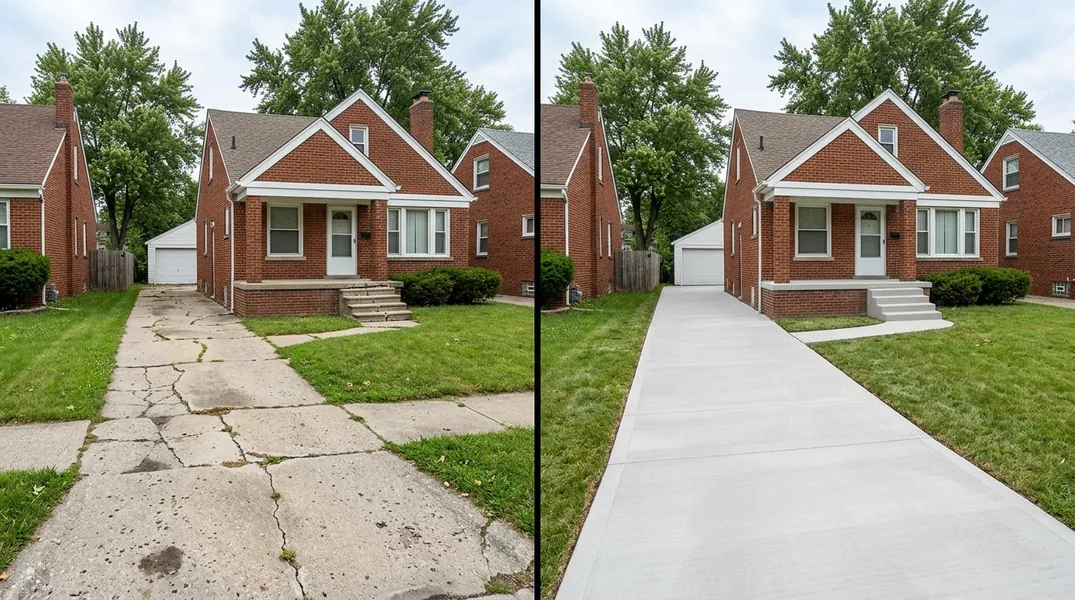
Why Timing Matters for Concrete Pouring in Michigan
When you're planning a Concrete Driveways project in Detroit, the time of year you choose can make or break your investment. Many homeowners assume they can pour concrete whenever they want, but the reality is that weather, temperature, and humidity play critical roles in how your concrete cures and performs over time. Pouring concrete in the wrong season can lead to cracks, weak spots, premature deterioration, and costly repairs down the line.
The science behind concrete curing is straightforward: the concrete needs adequate time and proper conditions to reach its full strength. Temperature fluctuations, frost, excessive rain, and extreme heat all interfere with this process. As a Detroit concrete contractor with years of experience, Detroit Concrete understands the unique climate challenges of Michigan and can guide you toward the optimal window for your project. Getting the timing right means your driveway, patio, or other concrete surface will last decades rather than years.
Spring: The Ideal Season for Concrete Pouring
Spring, particularly late April through May, is widely considered the best time to pour concrete in Michigan. After the harsh winter freeze thaws, temperatures begin to stabilize in the 50 to 70 degree Fahrenheit range, which is ideal for concrete curing. The soil has warmed enough that frost heave is no longer a concern, and the risk of unexpected freezes has largely passed. Spring also tends to bring moderate moisture levels, which supports even curing without the extreme dryness of summer or the saturation of fall.
During spring, your concrete will cure at a steady, predictable pace. The moderate temperatures allow the chemical reaction within the concrete to proceed uniformly, creating a strong, durable surface. If you're planning Concrete Patios or other outdoor projects, spring gives you the advantage of avoiding the intense heat that can cause rapid surface drying and internal stress. Many homeowners in the Detroit area choose to schedule their concrete work in spring specifically for these reasons. Contact Detroit Concrete at (313) 422-7903 to discuss your spring project timeline and secure a free estimate.
Summer Concrete Pouring: Challenges and Solutions
Summer presents a mixed bag for concrete pouring in Michigan. While warm temperatures might seem beneficial, they actually create several challenges for concrete curing weather conditions. High heat accelerates the evaporation of water from the concrete surface, which can cause rapid, uneven curing. This leads to surface cracks, scaling, and a weaker overall structure. Additionally, summer thunderstorms can be intense and unpredictable, potentially flooding a freshly poured slab or washing away the top layer before it has time to set.
That said, summer work is not impossible if you take precautions. Professional contractors like Detroit Concrete use specialized techniques such as increased watering schedules, shade cloth, and proper timing of finishing work to mitigate summer heat effects. If you must pour concrete during the hot months, early morning pours allow cooler conditions during the critical first 24 to 48 hours of curing. Summer can work for Stamped & Decorative Concrete projects if managed carefully by experienced professionals. If you're considering summer work, we recommend calling (313) 422-7903 to discuss protective measures that will ensure your concrete cures properly despite the heat.
Fall and Winter: When to Avoid Pouring Concrete
Fall and winter are generally the worst times to pour concrete in Michigan, and understanding why will help you protect your investment. As temperatures drop below 50 degrees Fahrenheit, the concrete curing process slows dramatically. Below 40 degrees, curing becomes so slow that the concrete may not reach adequate strength for months. Winter frost cycles are particularly destructive: water trapped in the concrete freezes and expands, causing internal damage that weakens the structure and creates surface spalling and potholes. Even if your driveway appears fine immediately after pouring, freeze-thaw cycles throughout winter and spring can cause catastrophic failure.
The Detroit area experiences significant winter weather, with temperatures regularly dropping well below freezing from November through March. Concrete poured in late fall or winter is at high risk for premature cracking and structural failure. If you have existing concrete that needs repair, Concrete Repair & Resurfacing work should also be postponed until warmer months whenever possible. However, if an emergency repair is absolutely necessary during cold months, professional contractors can use specialized techniques and additives to minimize risk. Your best strategy is to plan ahead and schedule your concrete work for spring or early summer, ensuring your project completes well before fall arrives.
Concrete Curing Weather in Detroit: Temperature and Moisture Guidelines
Understanding the specific weather conditions needed for proper concrete curing will help you make an informed decision about timing. Ideal conditions include air temperatures between 50 and 85 degrees Fahrenheit, moderate humidity (not too dry, not too wet), and protection from direct rain during the first 24 to 48 hours. Soil temperature is equally important, as concrete cures from the bottom up. If the ground is frozen or waterlogged, curing will be compromised. Professional contractors monitor weather forecasts closely and often delay pours if rain is predicted within the curing window.
Humidity levels in the 40 to 60 percent range are optimal for concrete curing. Too much moisture can trap water in the concrete, while too little causes rapid surface drying and cracking. Detroit's spring and early summer weather typically provides these balanced conditions. Once concrete has cured for seven days under proper conditions, it reaches approximately 70 percent of its final strength. Full strength takes 28 days, but by day seven, the surface is typically ready for light traffic. Detroit Concrete monitors all these variables to ensure your project cures correctly, regardless of the season you choose.
Planning Your Concrete Project: Getting a Free Estimate
The best approach to timing your concrete project is to plan well in advance and consult with experienced professionals. Rather than rushing into a project during an unfavorable season, schedule your work during the optimal window and use the extra time to prepare your site, finalize your design, and budget accordingly. If you're considering Concrete Driveways, patios, or decorative concrete work, starting the conversation with a contractor in late winter or early spring ensures your project is queued for the best possible conditions.
Detroit Concrete specializes in helping homeowners throughout the Detroit area understand their concrete options and timing needs. We're ready to discuss your project, explain how seasonal factors affect your specific work, and provide transparent pricing for the work you need. Whether you're planning ahead or dealing with an urgent concrete issue, reach out to us at (313) 422-7903 or request a free estimate today. Our team will evaluate your property, discuss the best timing for your project, and create a plan that maximizes durability and value. Don't leave your concrete's future to chance, trust the local experts who know Michigan's climate inside and out.
Looking for a professional tree service in Detroit? Detroit Concrete responds fast for all your concrete needs.
Get a Free QuoteOur services: Concrete Driveways · Concrete Patios · Stamped & Decorative Concrete