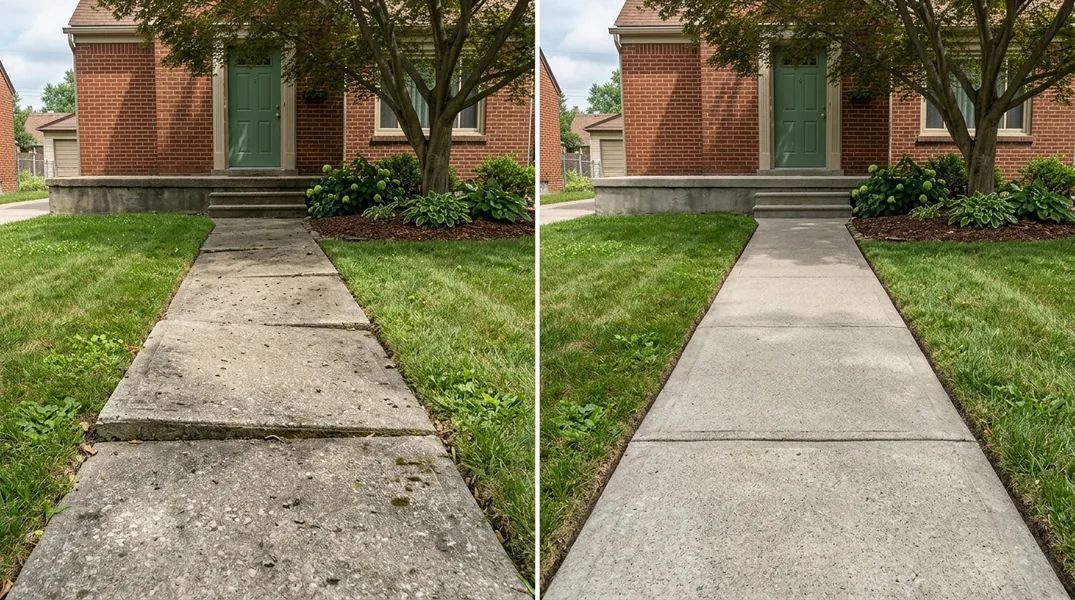
Understanding Freeze-Thaw Damage in Detroit Concrete
If you own a home in Detroit, you know that winter is unforgiving. The region's freeze-thaw cycle is one of the most damaging natural processes that concrete faces, and it's a primary reason why many homeowners in Michigan find themselves dealing with cracked, spalling, and deteriorating driveways by spring. Freeze-thaw damage occurs when water penetrates the porous surface of concrete, freezes during cold nights, expands, and then thaws during warmer days. This constant expansion and contraction puts enormous stress on the concrete structure, eventually leading to visible cracks, potholes, and surface deterioration.
The problem is particularly acute in Detroit because of our climate patterns. Winter temperatures regularly fluctuate above and below freezing, sometimes multiple times within a single week. A driveway might experience ten freeze-thaw cycles in a single month during March or early April, when daytime temperatures climb above freezing but nights still drop well below zero. Each cycle weakens the concrete slightly, and over the course of several winters, this cumulative damage becomes severe enough to require professional attention. Understanding this process is the first step toward protecting your investment and avoiding costly repairs down the road.
Why Detroit's Clay Soil Makes Concrete Damage Worse
Many homeowners don't realize that the problem isn't just the freeze-thaw cycle itself, but also what lies beneath their driveways. Much of Detroit and the surrounding region sits on clay-based soil, which has unique characteristics that amplify concrete damage. Clay soil holds water like a sponge, which means that water doesn't drain away from your driveway's base as quickly as it would in sandy or well-draining soil. This trapped moisture creates the perfect conditions for freeze-thaw damage to accelerate. When water sits beneath your concrete driveway throughout the winter, it freezes repeatedly, pushing upward against the concrete and causing it to heave and crack.
Additionally, clay soil expands when wet and contracts when dry, creating an unstable foundation for your driveway. This movement, combined with the freeze-thaw cycle, means that clay soil driveway cracking is especially common in our area. The base of your driveway is constantly shifting, which puts additional stress on the concrete surface above it. If your driveway was installed without proper drainage solutions or a suitable base layer, the damage will happen faster. This is why many older driveways in Detroit neighborhoods show significant cracking and settling after just ten to fifteen years, while properly installed driveways can last twenty-five years or more.
Signs of Freeze-Thaw Damage and When to Act
Recognizing the early signs of freeze-thaw damage is critical because addressing problems early can prevent expensive repairs later. The first indicators are usually small surface cracks, often appearing in a spider-web or map-like pattern across the driveway. These hairline cracks may seem minor, but they're actually entry points for water. Once water gets into these cracks and freezes, it expands and widens them. Within one or two winters, small cracks can become large fissures. You might also notice spalling, which is the flaking or peeling away of the concrete surface, typically around the edges of the driveway or near expansion joints. Potholes are another telltale sign, and they're far more serious because they indicate that freeze-thaw damage has compromised the structural integrity of the concrete.
If you notice any of these signs, it's time to reach out to a professional. Waiting typically makes the problem worse and more expensive to fix. Small cracks can often be sealed with specialized concrete crack fillers, preventing water infiltration and stopping the damage in its tracks. Larger damage may require Concrete Repair & Resurfacing to restore your driveway's appearance and functionality. The sooner you address freeze-thaw damage, the more cost-effective your solution will be. If you're seeing signs of damage on your Concrete Driveways, don't wait until spring. Contact Detroit Concrete at (313) 422-7903 to schedule a free estimate and get a professional assessment of your driveway's condition.
Winter Concrete Care in Michigan: Prevention Strategies
The best approach to freeze-thaw damage is prevention. If your driveway is relatively new and in good condition, proper winter concrete care in Michigan can extend its life significantly. Start by keeping your driveway clean and dry during the fall and winter months. Remove leaves, debris, and standing water, as these trap moisture against the concrete surface. If you use salt or chemical deicers on your driveway, be aware that these products can accelerate concrete deterioration. While they help melt ice, they also increase water penetration and can damage the concrete over time. Consider using sand or kitty litter for traction instead, or switch to less damaging de-icing products if you must use chemicals.
Sealing your concrete is one of the most effective preventive measures you can take. A quality concrete sealer creates a protective barrier that reduces water absorption, which directly decreases the severity of freeze-thaw cycles. Sealing should be done every two to three years for maximum protection. Additionally, make sure your driveway has proper drainage. Water should flow away from the concrete surface toward your yard or a drainage system. If water pools on your driveway or collects along the edges, this is a sign of poor drainage that needs correction. Finally, fill any existing small cracks immediately with concrete crack filler. These inexpensive preventive measures can save you thousands of dollars in repair costs down the road.
Professional Concrete Repair Near Me: When DIY Isn't Enough
While some concrete maintenance tasks can be handled by homeowners, significant freeze-thaw damage requires professional expertise. Attempting to repair deep cracks, potholes, or widespread spalling yourself often results in poor outcomes that don't last through the next winter. Professional contractors have access to specialized equipment, high-quality materials, and proven techniques that deliver lasting results. They can also assess whether your driveway can be repaired or if it needs to be replaced entirely, helping you make the most cost-effective decision for your situation.
If you're searching for concrete repair near you in the Detroit area, Detroit Concrete has the experience and local knowledge to handle freeze-thaw damage effectively. Our team understands the specific challenges that Michigan winters present, and we know how clay soil affects driveway performance. We can recommend the best repair solution for your driveway's condition and budget. Whether you need simple crack sealing, partial repairs, or a complete Concrete Repair & Resurfacing project, we're equipped to help. Call us at (313) 422-7903 or visit our website to learn more about our services and get a free estimate today.
Protecting Your Investment: Long-Term Driveway Solutions
If you're planning a new driveway installation or considering replacing an older one, understanding freeze-thaw damage should influence your decisions. A properly installed driveway with adequate base preparation, correct slope for drainage, and quality materials will resist freeze-thaw damage far better than a cheaply installed one. The initial investment in a well-built driveway pays dividends over time through reduced maintenance and repair costs. Additionally, modern concrete sealers and protective coatings have improved significantly, offering better protection against Michigan's harsh winters than products available even ten years ago.
For homeowners looking to upgrade their outdoor spaces, Concrete Patios and Stamped & Decorative Concrete can also benefit from the same protective strategies used on driveways. Whether you're building new or repairing existing concrete, investing in quality installation and proper maintenance will ensure your concrete surfaces remain beautiful and functional for years to come. Detroit Concrete is committed to helping homeowners throughout the region protect their concrete investments. If you have questions about freeze-thaw damage, prevention, or repair options, reach out to us at (313) 422-7903. We're here to help you make informed decisions about your concrete needs.
Looking for a professional tree service in Detroit? Detroit Concrete responds fast for all your concrete needs.
Get a Free QuoteOur services: Concrete Driveways · Concrete Patios · Stamped & Decorative Concrete